

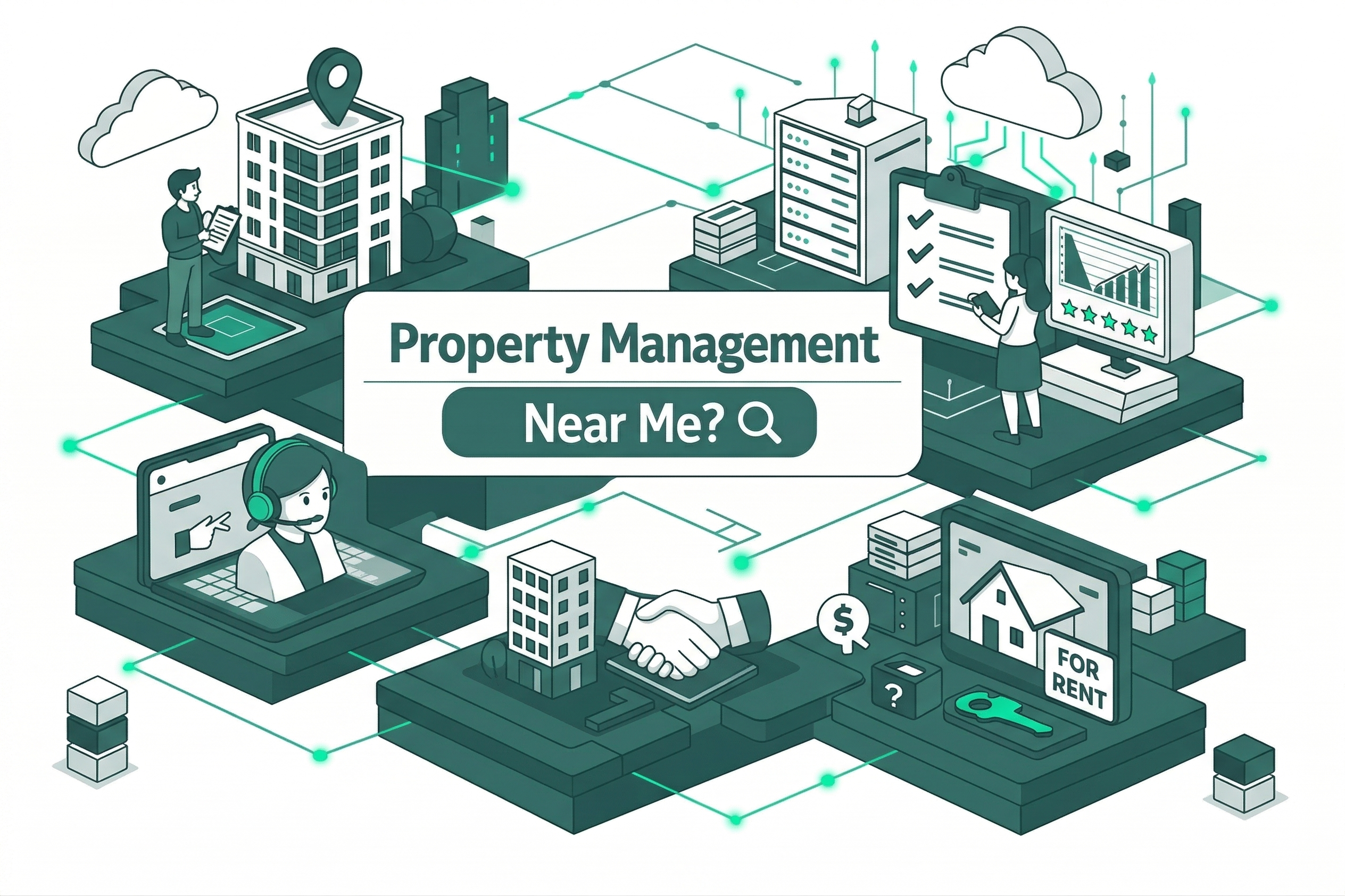
Many landlords start their search the same way: they type “property management companies near me” into Google, scroll through a list of results that all say roughly the same things, and end up more confused than when they started. The problem isn’t a shortage of options. It’s that many companies present themselves as full-service, experienced, and local, making it difficult to tell who actually delivers.
This guide cuts through that noise. By the end, you’ll know how to evaluate local property management services on the right criteria, decode fee structures that look simple but aren’t, and verify credentials before signing anything. The framework here draws from over two decades of on-the-ground rental property coordination across Miami and South Florida, the kind of market-specific context that generic comparison articles consistently miss.
Why “near me” is a strategic choice, not just a geographic filter
Choosing a locally based property manager affects your rental income more directly than most landlords realize. A manager who knows your neighborhood’s seasonal rental cycles, competing inventory, and realistic pricing range can fill vacancies faster and at stronger rates than a national chain running generic playbooks from a regional call center.
What genuine local knowledge actually delivers
A true local property management company uses neighborhood-level data to set competitive rental rates, not statewide averages. They’ve typically built vendor relationships over years, the kind that mean a reliable call gets made when a water heater fails on a Sunday night, rather than a ticket logged in a national system. Proximity also creates accountability: managers who operate nearby are far more likely to conduct regular property inspections and show up in person when something goes wrong.
When national firms underperform in local markets
Some landlords sign with a nationally recognized firm only to encounter high staff turnover, slow maintenance responses, and an assigned manager who has never visited the property. Local residential property managers have their reputation on the line at the neighborhood level, which changes how they prioritize your account. In large, centralized operations, a Miami landlord dealing with a tenant dispute in Brickell or a maintenance emergency in Coral Gables may find themselves routed through a regional desk with no direct market knowledge, adding days to what should be a same-afternoon resolution.
What a property management contract should actually cover
Before you compare any property management companies near me results or referrals, you need to understand what belongs in a standard full-service agreement versus what gets billed separately. Skipping this step is how landlords end up surprised by year-end statements that look nothing like the initial quote.
The services every full-service agreement includes
A proper full-service residential management agreement covers tenant screening and placement, rent collection, maintenance coordination, property inspections, monthly financial reporting, and marketing for vacant units. These are the baseline responsibilities that justify the monthly management fee. If a company’s contract omits any of these, it deserves a much closer read before you move forward.
The add-ons that quietly inflate your total cost
Services billed separately are standard in the industry, but they catch landlords off guard when they haven’t accounted for them upfront. Common add-ons include lease renewals, eviction coordination, deep cleaning after tenant turnover, repairs that exceed a cost threshold, and professional photography for new listings. These are reasonable line items, but they need to be part of your total cost calculation from day one. Always request a complete fee schedule before comparing any two rental property management companies side by side. For a checklist of common contract elements to watch for, see this guide on what to include in a residential real estate management agreement: what to include in a residential real estate management agreement.
How property management fees actually work
Fees are where most landlords make their first comparison mistake. They look at the monthly management percentage, pick the lowest number, and call it done. That approach ignores every other line item in the agreement, which is often where the real cost lives.
Percentage-based vs. flat-fee models explained
In Florida, most residential property managers charge between 8% and 12% of monthly rent collected. On a $2,000 per month rental, that translates to $160 to $240 per month. In high-demand Miami markets, some firms charge closer to 10% to 14% for single-family homes. Flat fees typically run $100 to $250 per month and may work well for larger portfolios, though they can reduce the manager’s direct incentive to maximize your rental rate at renewal time. Neither structure is universally better; the right fit depends on your property type, portfolio size, and how actively you want the manager optimizing rent. For a deeper look at typical fee structures across Florida markets, review a regional summary of property management fees in Florida: property management fees in Florida.
The additional charges you need to budget for
Leasing fees, charged when a new tenant is placed, typically run 50% to 100% of one month’s rent. Setup or onboarding fees often fall between $150 and $500, though many companies waive them as part of an introductory offer. Eviction coordination and lease renewal fees are billed separately in most agreements. Factor all of these into your annual cost projection before deciding which company offers the best overall value. As a practical example: a company charging 9% monthly with a $500 leasing fee may cost you more per year than one charging 11% with no leasing fee, depending on your turnover rate.
How to vet property management companies near me on credentials and reputation
A polished website and a long list of services don’t tell you much about how a property management company actually performs day to day. Real vetting requires a few specific checks that many landlords skip entirely.
Licensing and insurance requirements to confirm
In Florida, property managers who collect rent and lease properties on behalf of owners are required to hold an active real estate broker or salesperson license issued by the Florida Department of Business and Professional Regulation (DBPR). Practicing without one is a third-degree felony under state law. Verify any company’s license directly through the DBPR’s online portal before moving forward.
Beyond the state license, look for Errors and Omissions (E&O) insurance coverage, which protects you if the manager makes a costly professional mistake. Professional certifications like the Certified Property Manager (CPM) designation from the Institute of Real Estate Management (IREM) signal a higher level of commitment to the craft and are worth weighting in your comparison. For a plain-language overview of common contract terms and obligations, this property management contract resource can help clarify what you should expect: property management contract essentials.
How to read reviews without getting misled
Check Google, Zillow, and Yelp for volume as much as for rating. A company holding a 4.9 rating from 800 reviews carries significantly more weight than a perfect score from 12. Look for patterns in negative feedback, specifically around communication failures, maintenance delays, and owner payout issues. One or two complaints about minor friction are normal for any active business. Repeated themes across dozens of reviews are a genuine warning sign. Prioritize recent reviews over older ones, since a company’s service quality can shift significantly when ownership or management changes. For a centralized view of property manager feedback, see aggregated listings and reviews on Zillow’s property manager reviews.
The questions that reveal how a company actually operates
Once a company passes the credibility check, the initial interview is where you gather the information that actually determines your day-to-day experience as an owner. Treat this conversation as a due diligence interview, not a sales call, the answers here will matter far more than anything in a brochure.
What to ask about fees, vacancy, and leasing strategy
Ask for a complete breakdown of every fee, not just the monthly management percentage. Find out their average vacancy rate, how they market a vacant unit, and whether they use professional photography and syndicated listing platforms to maximize exposure. Ask how they price rentals initially and whether they conduct market reviews at lease renewal time. A manager who struggles to explain their pricing methodology clearly may not be actively working to protect your rental income.
What to ask about communication and tenant screening
Find out how many properties each manager handles and what their typical response time is for maintenance requests from tenants. Ask how they communicate with owners: monthly statements, owner portals, direct phone contact. For tenant screening, confirm the specific criteria they apply: minimum credit score thresholds, income-to-rent ratios, rental history verification, and background check standards. In South Florida, it’s also worth asking how they handle the eviction process specifically, Miami-Dade County court timelines can run longer than landlords expect, and a manager with direct local court experience handles that differently than one working from a standard template. These details predict your actual experience more accurately than any sales conversation.
How to compare your shortlist of nearby rental management firms
With three to five local property management companies identified and vetted, the comparison phase is where many landlords still leave money on the table by defaulting to the lowest price. A structured approach prevents that.
Building a side-by-side comparison that actually works
Evaluate each company across five categories: total fee structure (monthly management fee plus all additional charges), services included in the base agreement, vacancy rate history, licensing and certifications, and communication protocols. Weight the categories based on your priorities as an owner. A landlord managing multiple units across Miami-Dade may prioritize portfolio reporting and multi-property coordination. A landlord with a single high-value rental may care most about tenant screening standards and occupancy consistency. Your priorities should drive the comparison, not the company’s pitch.
- Total fee structure: Monthly fee plus leasing, renewal, setup, and eviction costs
- Services included: What’s in the base agreement vs. what triggers an extra charge
- Vacancy rate history: Ask for actual data, not marketing claims
- Licensing and certifications: DBPR license verification plus CPM or equivalent credentials
- Communication protocols: Owner portal access, reporting frequency, dedicated contact
Why talking to a local advisory team first saves you time
Before locking into a management agreement, a conversation with a local property advisory team can clarify exactly what level of service your rental actually needs. At Associates Realty, we offer a free consultation for landlords evaluating their rental management options across Miami and South Florida. Our team helps you frame the right questions, compare your shortlist objectively, and identify fee structures that look competitive on the surface but underdeliver in practice. With more than 20 years of local market experience and a vetted network of licensed professionals, we’ve worked through every variation of this decision and know how to help you get it right.
Make the decision with confidence, not guesswork
Finding the right property management services near you isn’t about choosing the cheapest option or the company with the most impressive website. The goal is identifying a team that understands your specific market, handles your property with genuine care, and communicates clearly enough that you never feel out of the loop on your own investment.
If you’re managing rentals in Miami or South Florida and want experienced guidance as you evaluate property management companies near me, or anywhere across the region, Associates Realty is ready to help. Reach out to schedule your free consultation and take the guesswork out of choosing the right property management approach for your portfolio.
Leave a Reply